The Tyrantborn — Dark Elves
A ruthless sub-race of elves dwelling in the obsidian underworld of Xal'Zareth. Masters of blood, void, shadow, and abyssal magic — slavers, raiders, and mage-warriors who believe their race is supreme above all others.
Full Record
Physical Traits
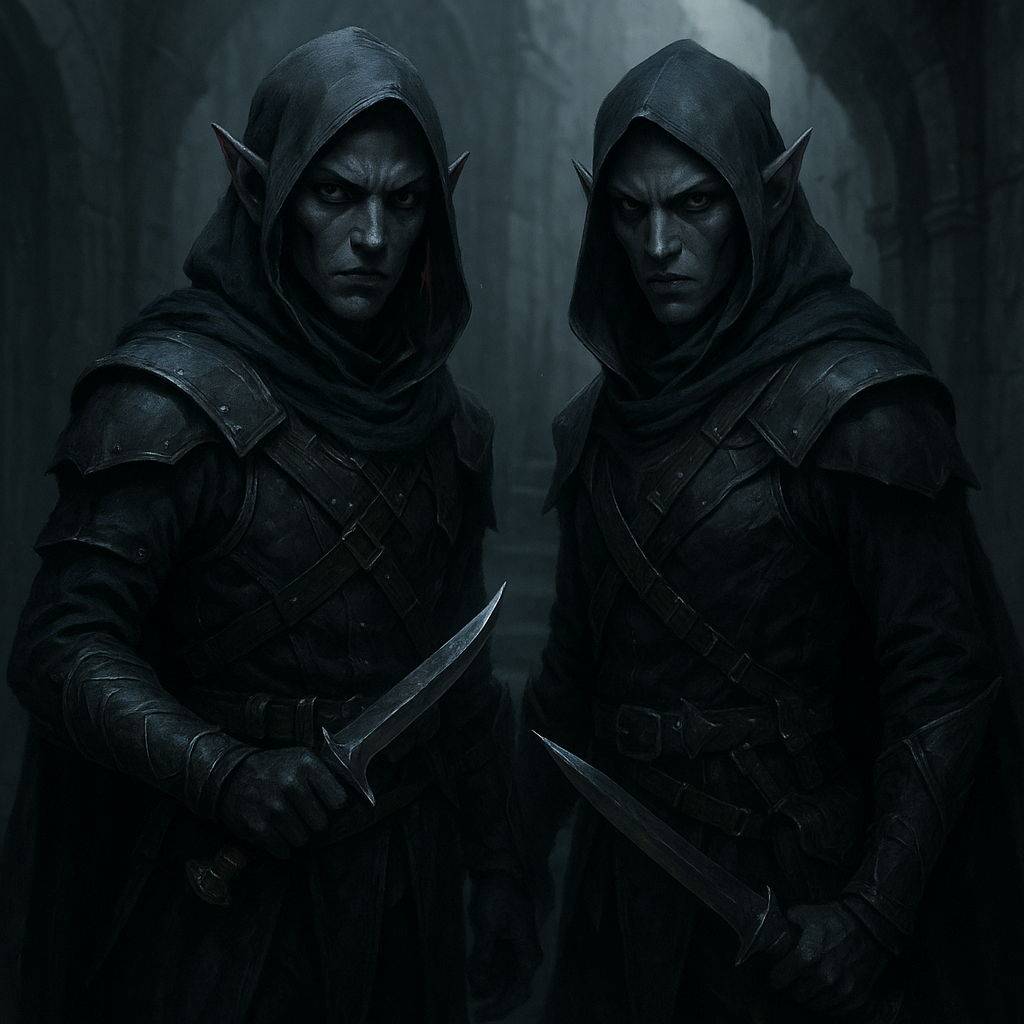
The Dark Elves are instantly recognizable by their dark, shadow-touched skin and piercing eyes that glow faintly in total darkness. Those born into noble clans are tattooed with magical white ink across their faces and bodies — sigils that glow faintly in total darkness. These markings denote rank, ancestry, and arcane power. Those without such marks — the Tattooless — are exiles, criminals, or clanless bastards, often treated no better than slaves.
Culture & Society
To understand the Dark Elves is to abandon the concepts of morality, compassion, or empathy. Their society is built not on justice — but dominance. Strength is the only virtue. And weakness is a debt to be collected in blood. They are divided into ancient, warring clans, each tracing its bloodline through sorcery, conquest, or mutation. Unlike many surface cultures, gender holds no role in power. Dark Elf men and women are equals — in magic, in cruelty, in leadership. The throne of Xal'Zareth has been held by both kings and queens alike, all known only by one title: Tyrant. The Tyrant is not a ruler in the traditional sense. They are the greatest predator, chosen through a cycle of ritual combat, arcane duels, and carefully orchestrated assassination. The strongest clans serve as their advisors — though in truth, every advisor is also a rival, waiting for weakness.
Homeland
Xal'Zareth — a sprawling obsidian underworld beneath the fractured crust of Tanelon, bathed in eternal blackness
Known As
Magic and Combat
The Dark Elves are mage-warriors of terrifying skill. They do not separate the blade from the spell. To fight one is to face a duelist who can rip the blood from your veins while dodging your sword. Their magic is drawn from the dark wells of reality: Blood Magic, which allows them to heal by draining the agony of others. Void Magic, used to tear sanity and space itself. Shadow Magic, which cloaks their movements in silence. And Abyssal Magic, a raw, unholy force that unravels both flesh and soul. They do not employ healers or priests. They do not pray. They feed on pain, suffering, and blood, restoring themselves with the agony of others. Their weapons are forged from obsidian metal, pulled from the black veins of their homeland. Sharp, jagged, and often cursed, these blades are paired with barbed whips, chains, and hand crossbows tipped with paralytic venom. Every warrior carries poison. Some carry dozens. And none hesitate to use them. They ride into battle atop two-legged lizard beasts, creatures bred in darkness to move silently across stone, climb walls, and rip flesh with hooked talons. When the gates open and the Dark Elves charge forth, there is no trumpet. No roar. Just the whisper of steel and the bite of chains.
Language and Communication
Though fluent in many tongues, the Dark Elves often refuse to speak aloud. Among themselves, they rely on a refined, fluid sign language — a silent code of hand gestures used in raids, rituals, and war councils. To speak aloud in battle is seen as weakness. Silence is power. Silence is control. Their voices are often soft, melodic, and cold when they do choose to speak. But beneath the softness lies venom, like silk hiding a blade.
Outposts and Slavery
Throughout the world of Tanelon, the Dark Elves maintain a vast and hidden network of surface outposts. Most are built around magical gateways — runes etched in blood and voidstone that allow them to strike from nowhere. Many of these outposts appear abandoned or overgrown. Some lie beneath old ruins, others hidden in cliffs, caves, or cursed forests. From these nodes, they stage raids on towns, cities, and caravans — taking slaves, gold, knowledge, or simply for sport. They have no economy in the surface sense. Their wealth is measured in flesh, secrets, and obedience. Slavery is not a side effect of their culture — it is their culture. Every Dark Elf family owns slaves. Some have hundreds. Others thousands. Most surface dwellers captured by the Dark Elves either kill themselves or go mad before ever reaching the underworld. Those who don't… suffer lives of torment, mutilation, and silence.
Rebellions and Resistance
Though some whisper of rebellion, almost all are crushed within days. The Dark Elves are masters of control — using pain, fear, and arcane collars to dominate their chattel. Slave revolts have occurred, but each ends in blood, fire, and often ritual sacrifice of the survivors. The few who escape tell stories that leave even hardened soldiers weeping. It is said that to fall into the hands of the Dark Elves is a fate worse than death. Most believe that. Because it's true.
Arrogance and Isolation
Despite their reach and power, the Dark Elves have no interest in conquering the surface. To them, the world above is beneath them — a realm of filth, sun, and softness. They raid only to collect what they desire: slaves, materials, knowledge, or entertainment. Their love for their homeland is unmatched. The echoing silence of Xal'Zareth, the taste of black wine, the glow of fungi gardens, the scent of blood on stone — these are things no surface world can offer. The very idea of permanent colonization above ground is laughable. The surface exists to be bled, not ruled. And yet, now and then, rumors surface — of a massive force gathering underground. Of a new Tyrant uniting the clans for a massive Obsidian Crusade. Not to conquer. But to harvest. Entire kingdoms, perhaps. Not for gold. But for meat.
Relations with Other Races
Though the Dark Elves view themselves as superior to all other species, they are not above interacting with the surface world — when it suits them. On rare occasions, they enter human cities to conduct business, trade, or mercenary deals. But even then, they refuse to degrade themselves by speaking directly to what they consider lesser beings. Instead, they choose a representative — usually a slave trained in diplomacy or speech — to act as their voice. This slave speaks with the merchants, negotiates prices, signs contracts… while their Dark Elf master stands in silence nearby, cloaked in shadow, watching like a spider. It is an act of dominance. A reminder: they do not speak to food. Despite this disdain, some Dark Elves have, over centuries, gained reputations among surface nations as mercenaries, assassins, or even heroes. These individuals are almost always clanless outcasts — Tattooless, driven from the Deep Warrens, and forced to survive above ground. Their deeds may save lives, topple tyrants, or defeat demons — but no matter what they do, they are never fully trusted. Among common folk, a Dark Elf walking openly in a city may not be attacked… but they are rarely welcomed. Whispers follow them like shadows. Doors close. Children are pulled from streets. Soldiers keep hands near hilts. They are feared, hated, and obeyed, but never embraced. Even the few who fight for good carry the scent of blood with them. And the people of Tanelon — those who remember what happens when the black gateways open — know better than to believe a Dark Elf has truly changed.
Intelligence Brief
- Category
- Races & Peoples
- Subcategory
- elven
- Homeland
- Xal'Zareth — a sprawling obsidian underworld beneath the fractured crust of Tanelon, bathed in eternal blackness
Keep Exploring
Connected Records
Entries linked to The Tyrantborn — Dark Elves across the Lore Codex.
The Highborn — High Elves
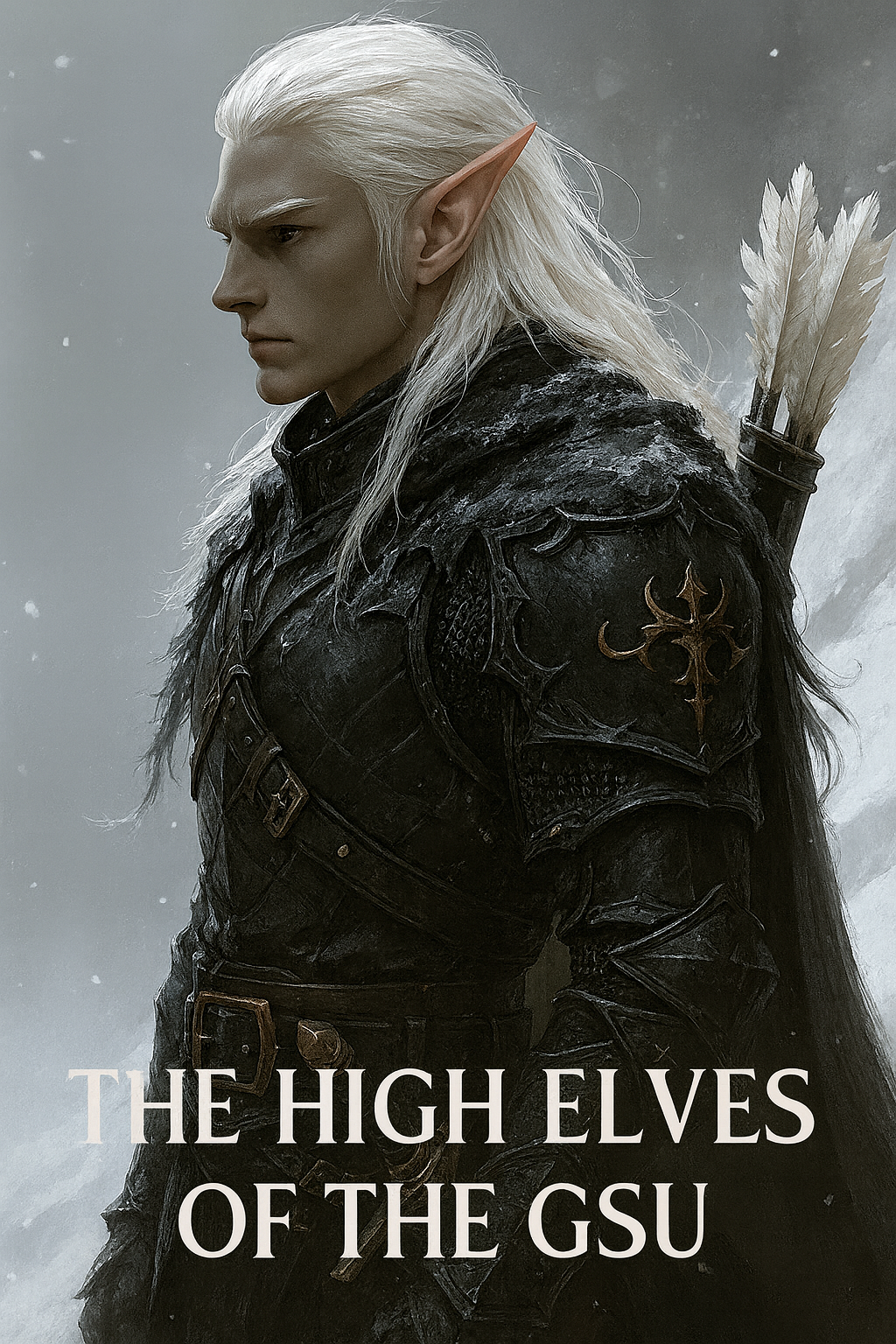
An ancient and immortal elven race of unmatched magical precision and celestial discipline. Lords of the Triune Light, they dwell in three hidden kingdoms aligned with the sun, moon, and stars.
The Treeborn — Wood Elves
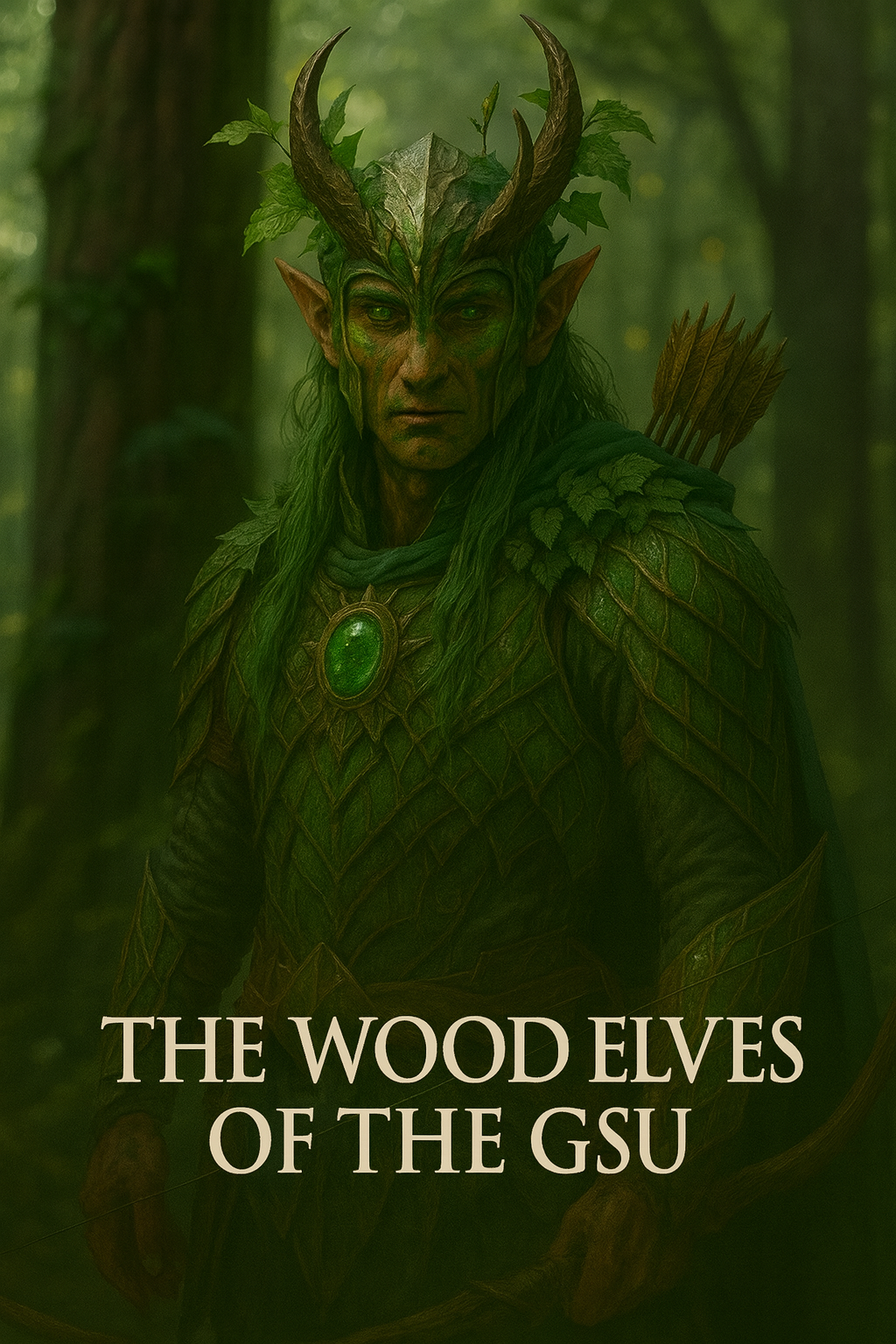
A forest-bound elven race whose existence is inseparable from the living world. The greatest archers, rangers, and snipers in the world — masters of nature magic, beastlore, and healing across three ancient woodland kingdoms.
The World of Tanelon
The ancient world where the Grim Shadows Universe takes place. Older than empires. Older than kings. Broken and reforged across ages.